
How to Use the Order Book
Learn how to use the Order Book on PLUBIT Exchange. This beginner-friendly guide explains bid and ask orders, market depth, liquidity, and how the Order Book helps you make more informed trading decisions.
By plubit support · August 5, 2026
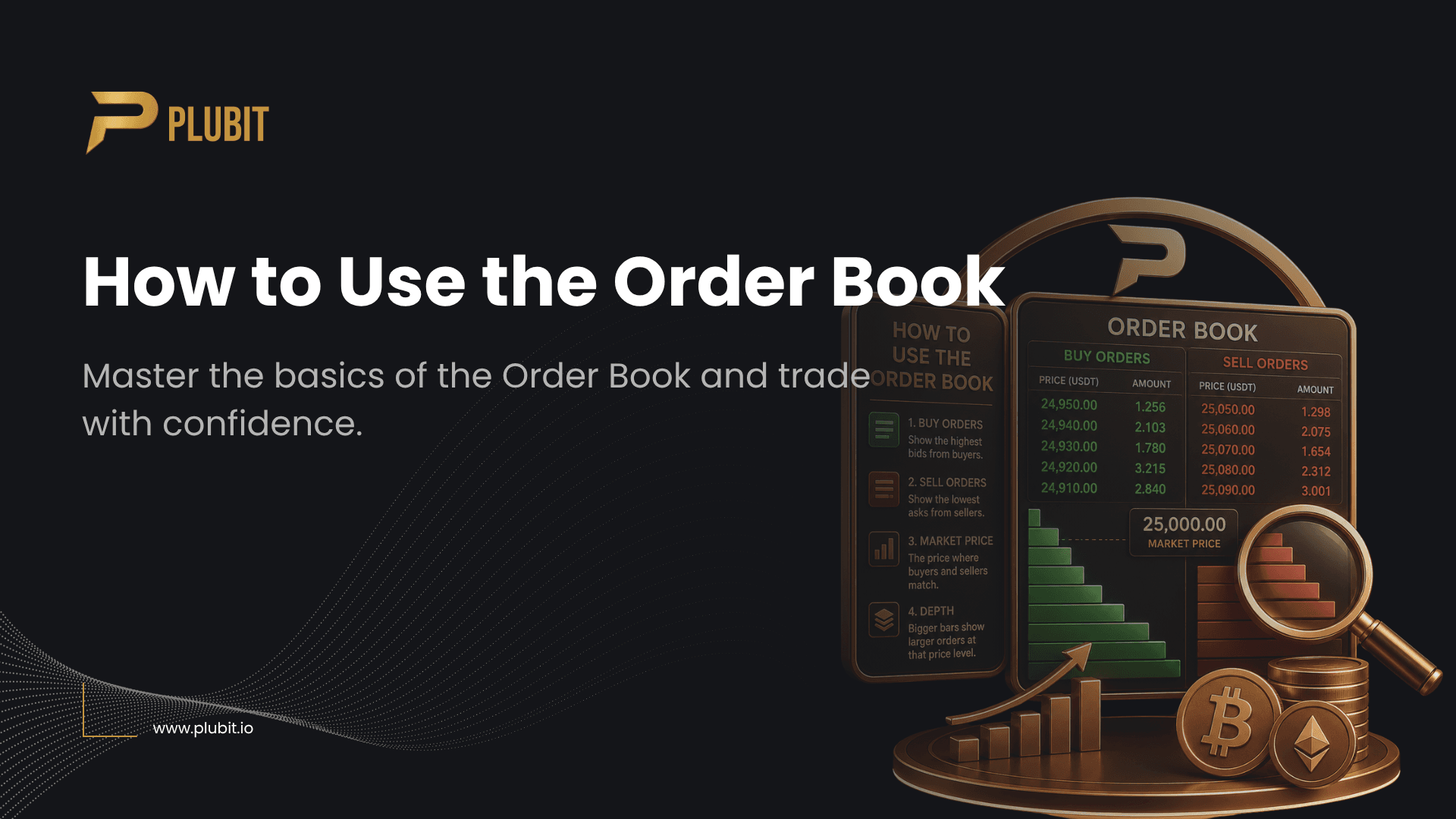
Main Takeaways
- The Order Book displays active buy and sell orders in real time.
- Bid Orders represent buyers, while Ask Orders represent sellers.
- The Bid-Ask Spread indicates the difference between buying and selling prices.
- Market Depth helps measure liquidity.
- Understanding the Order Book can improve your trading decisions.
The Order Book is one of the most important tools available on the PLUBIT Exchange trading interface. It provides a real-time view of all active buy and sell orders for a trading pair, helping traders understand current market activity and liquidity.
Whether you're placing a Market Order or a Limit Order, understanding how the Order Book works can help you make more informed trading decisions and improve your overall trading experience.
In this guide, you'll learn how to read the Order Book, understand bid and ask prices, and use market depth to analyze supply and demand.
What Is an Order Book?
An Order Book is a real-time list of all active buy and sell orders for a specific trading pair.
It continuously updates as traders place, modify, execute, or cancel orders.
For example, when viewing the BTC/USDT market, the Order Book displays:
- Current Buy Orders (Bids)
- Current Sell Orders (Asks)
- Order Prices
- Order Quantities
The Order Book only displays orders that have not yet been executed.
Why Is the Order Book Important?
The Order Book helps traders understand:
- Current market demand
- Current market supply
- Price levels where buyers are active
- Price levels where sellers are active
- Overall market liquidity
By observing the Order Book, traders can better understand how the market is behaving before placing an order.
Understanding Bid and Ask Orders
The Order Book consists of two main sections.
Bid Orders (Buy Orders)
Bid Orders are orders placed by traders who want to buy cryptocurrency.
Each bid displays:
- Buy Price
- Quantity
- Total Value
The highest bid is the highest price buyers are currently willing to pay.
Ask Orders (Sell Orders)
Ask Orders are orders placed by traders who want to sell cryptocurrency.
Each ask displays:
- Sell Price
- Quantity
- Total Value
The lowest ask is the lowest price sellers are currently willing to accept.
Understanding the Bid-Ask Spread
The difference between the highest bid price and the lowest ask price is called the Bid-Ask Spread.
Example:
Highest Bid:
99,950 USDT
Lowest Ask:
100,000 USDT
Bid-Ask Spread:
50 USDT
Generally:
- Smaller spreads indicate higher market liquidity.
- Larger spreads may indicate lower liquidity or higher market volatility.
Understanding Market Depth
Market Depth refers to the number of buy and sell orders available at different price levels.
A deep Order Book usually means:
- More active traders.
- Better liquidity.
- Faster order execution.
- Lower price impact for large trades.
A shallow Order Book may result in:
- Larger price movements.
- Greater slippage.
- Slower execution for large orders.
Reading the Order Book
When viewing the Order Book, you'll typically see:
Price
The price buyers or sellers are offering.
Quantity
The amount of cryptocurrency available at that price.
Total
The cumulative value of all orders at that price level.
By comparing these values, traders can estimate how much buying or selling pressure currently exists.
How the Order Book Works with Market Orders
When you place a Market Order:
- The system automatically matches your order with the best available prices in the Order Book.
- If sufficient liquidity exists at one price level, your order may execute immediately.
- If not, your order may be filled across multiple price levels.
This is one reason why large Market Orders may experience slippage.
How the Order Book Works with Limit Orders
When you place a Limit Order:
- Your order is added to the Order Book.
- Other traders can see your order.
- Your order remains active until:
- Another trader matches it.
- You cancel it.
- It expires (if applicable).
Tips for Using the Order Book
To make better trading decisions:
- Observe the highest bid and lowest ask prices.
- Compare market depth before placing large orders.
- Watch for sudden changes in buying or selling activity.
- Use the Order Book together with candlestick charts.
- Avoid relying on the Order Book alone when making trading decisions.
Frequently Asked Questions (FAQ)
1. Does the Order Book update in real time?
Yes.
The Order Book updates continuously as traders place, modify, execute, or cancel orders.
2. What is the difference between Bid and Ask?
- Bid is the highest price buyers are willing to pay.
- Ask is the lowest price sellers are willing to accept.
3. Why do prices change so quickly?
Because new orders are constantly entering and leaving the market, causing the Order Book to update in real time.
4. Can I trade directly from the Order Book?
The Order Book itself is used to display market information.
You place trades using the trading panel, where your orders are matched against available orders shown in the Order Book.
5. Why is the Order Book important?
The Order Book helps traders understand liquidity, supply and demand, and current market conditions before placing an order.
Common Issues
IssueSolution
Order Book changes rapidly
This is normal during active market conditions.
Large spread between Bid and Ask
Consider waiting for better liquidity or using a Limit Order.
Difficulty understanding the data
Start by focusing on the Price and Quantity columns.
Large orders affecting price
Review market depth before placing significant trades.
Unexpected execution price
Check available liquidity and consider using a Limit Order for greater price control.
Final Thoughts
The Order Book is a powerful tool that provides valuable insight into market activity on PLUBIT Exchange. By understanding bid and ask orders, market depth, and liquidity, you can make more informed trading decisions and better understand how cryptocurrency markets operate.
While the Order Book is useful for analyzing supply and demand, it should be combined with candlestick charts, trading volume, and sound risk management for a more complete trading strategy.